The fame of the Maison

9a
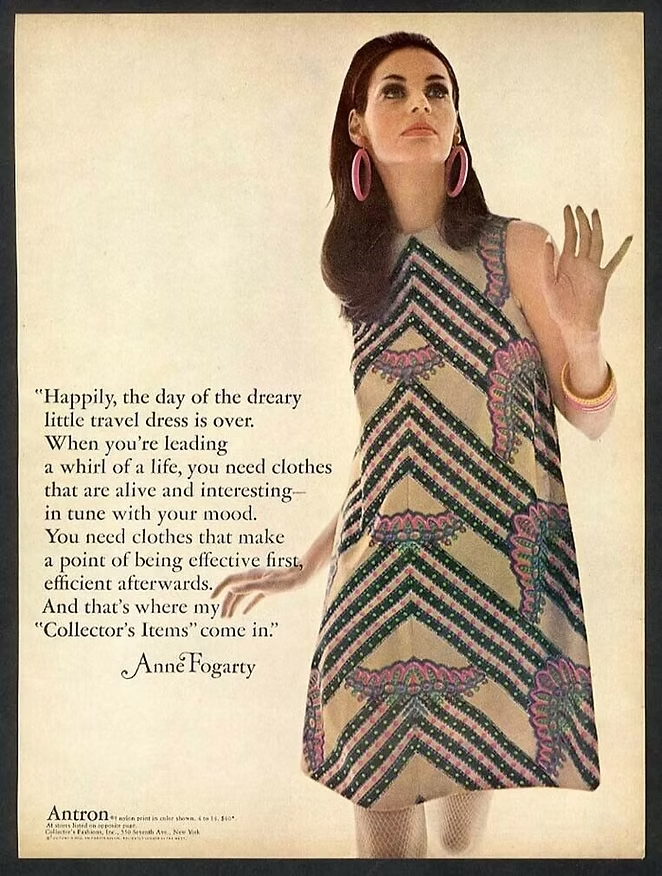
Anne Fogarty’s Mini Skirt, Magazine advertisement, 1967
Anne Fogarty, the brand and its fame

The fame of the Maison is historically linked to the figure of its creator, Anne Fogarty, a icon of fashion that deserves, still in our days, a place among the greatest brands with heritage. 

Her signature style, her innovative and feminine design, often referred to as the “Fogarty Look”, embodied a unique blend of elegance, sophistication and youthful charm. 

“Anne Fogarty” and “Anne Fogarty Boutique” are trademarks registered in United States, China, European Union and United Kingdom, in order to have worldwide legal safeguards and solid protection for a brand holding great value through its strong legacy, distinct aesthetic identity, and historical reputation.

Today, there is the opportunity for its successful relaunch; new collections inspired by Anne Fogarty’s will have a competitive advantage thanks to her unique style and the historical reputation of this important brand.

The profound influence on American fashion

Anne Fogarty’s designs started to gain widespread popularity in the 1950s, gracing the covers of prominent fashion magazines and adorning the wardrobes of celebrities and fashion-forward women (including famous Hollywood actress).

Anne Fogarty’s influence on American fashion is profound and is still visible in contemporary fashion, with designers drawing inspiration from her emphasis on flattering silhouettes and attention to detail. At its peak, the brand was a commercial success, distributed through major department stores and often present on the most important fashion magazine.

2a.webp

Sandy Brown in Anne Fogarty's quilted striped dress for Vogue, February 1952

1a.webp

Model in Anne Fogarty's red linen dress photographed by Sante Forlano, June 1960

14a.webp

Anne Fogarty’s dress advertising (Vogue, 1954)

3a.webp

Cocktail outfit by Anne Fogarty, 1952

15a.webp

Cotton stripe dress by Anne Fogarty (1950s)

4a.webp

Anne Fogarty dress, Julliard 1953

Revolutionary designs that are still current

Anne Fogarty’s designs were revolutionary for their time; in an era when fashion was often formal and restrictive, Fogarty introduced playful, feminine, and wearable designs. Her iconic “Anne Fogarty Party Dress” became a symbol of femininity, featuring a fitted bodice and a full, twirling skirt. 

Anne Fogarty’s style played a significant role in shaping the American fashion landscape launching an era of feminine grace and glamour. Anne Fogarty was a leading designer of junior fashion and her style became known as the young “American look”. 

21.webp

Leonie Vernet in Anne Fogarty's dress, Vogue, 1954

17a.webp

Suzy Parker wears Anne Fogarty, 1952

11.webp

Dolores Hawkins wearing Anne Fogarty, 1957

20a.webp

Anne Fogarty’s silk shantung cocktail dress with deep v neckline, 1950s

8a.webp

Summer dress by Anne Fogarty, 1950s

5a.webp

Anne Fogarty’s Gold and coral print dress (1955)

She created a successful brand

Her designs were known for their meticulous attention to detail, including intricate embellishments, exquisite fabrics, and meticulous tailoring. In 1954, she introduced “the Tea cozy dress” (the full skirt fell from a dropped, rather than natural waist).

From its launch in 1962, the brand Anne Fogarty Boutique has been celebrated not only for its aesthetic appeal but also for its accessibility because allowing a broader audience to embrace high-quality fashion.

 
19a.webp

Vicara, Anne Fogarty dress' advert, 1955

anne fogarty dress .webp

Curtis Roosevelt wearing Anne Fogarty (photo by Mark Shaw, 1952)

18a.webp

Anne Fogarty’s discotheque dress, June 1964

22.webp

Model wearing a pale gold shirt dress in a soft knitted lamé by Anne Fogarty (photo of McLaughlin, Vougue, September 1960)

16a.webp

Actress and model Twiggy in Anne Fogarty dress, photographed by Richard Avedon for Vogue, 1967

13a.webp

Anne Fogarty dress, 1967

She becames a fashion icon

Extremely narrow and highlighted waist, full ballet skirt and lots of petticoats were the common elements of her creations with always the aim to highlight the womanhood above all and on every occasion. The first petticoats she designed were of netting, but she worked with Gracette lingerie to develop a new type which was made of nylon “horsehair”.

During the 1960s Anne Fogarty produced A-line dresses and, after the miniskirt became established, designed peasant-inspired dresses in both mini-lengths and maxi-lengths. 

Her new favorite silhouette, replacing full skirts, was the straight-skirted, high-waisted Empire line dress with tiny puff sleeves and low neckline.  Anne Fogarty’s designs in the later 1960s and 1970s became quite adventurous, including trouser suits and caftans.

7a.webp

Woman in black and white strip costume by Anne Fogarty (National Cotton Council 1964 Adv.)


12a.webp

Swedish fashion model Agneta Frieberg wearing a grey dress by Anne Fogarty (Glamour, March 1965)

10a.webp

Anne Fogarty’s jersey shirtdress (Magazine advertisement, 1960s)

editha dussler in anne fogarty vogue.webp

Editha Dussler in Anne Fogarty, Vogue (September 1966)

editha dussler in anne fogarty dress, vogue

Editha Dussler in Anne Fogarty Dress, Vogue (September 1969)

model in an anne fogarty sweater vogue.webp

Model in an Anne Fogarty Sweater, Vogue (August 1972)

Shopping Cart
Anne Fogartyx
Chatbot